

Amillennialism is a theological perspective within Christian eschatology that interprets the “millennium” mentioned in the Book of Revelation not as a literal thousand-year reign of Christ on Earth, but rather as a symbolic period representing the current church age. This document aims to clarify the key concepts and beliefs associated with amillennialism, its historical context, and its implications for Christian doctrine and practice.
Key Concepts of Amillennialism
- Symbolic Interpretation: Amillennialists view the millennium as a metaphorical period that reflects the reign of Christ in the hearts of believers and the church’s mission on Earth, rather than a future physical kingdom.
- Current Reign of Christ: According to amillennialism, Christ is currently reigning from heaven, having established His kingdom through His death and resurrection. This reign is spiritual and transcends earthly boundaries.
- Eschatological Events: Amillennialists believe that the second coming of Christ will occur at the end of the current age, leading to the final judgment and the establishment of a new heaven and new earth.
- Resurrection: In amillennial thought, the resurrection of the dead is seen as a singular event that occurs at Christ’s return, rather than being divided into separate resurrections for different groups of people.
Historical Context
Amillennialism has roots in early Christian thought and was notably articulated by theologians such as Augustine of Hippo in the 4th century. It gained prominence as a counterpoint to premillennialism, which posits a literal thousand-year reign of Christ on Earth following His second coming. Throughout history, amillennialism has been embraced by various denominations, particularly within Reformed and Catholic traditions.
Implications for Christian Doctrine
The amillennial perspective influences various aspects of Christian theology, including:
- Understanding of the Kingdom of God: Amillennialists emphasize the present reality of God’s kingdom, encouraging believers to live out their faith actively in the world.
- Hope and Eschatology: This view fosters a sense of hope and urgency, as believers are called to engage in the world with the expectation of Christ’s return and the ultimate fulfillment of God’s promises.
- Interpretation of Scripture: Amillennialism encourages a non-literal interpretation of prophetic texts, focusing on the spiritual and moral lessons rather than specific timelines or events.
Conclusion
Amillennialism presents a unique approach to understanding the end times and the nature of Christ’s kingdom. By emphasizing the current reign of Christ and the symbolic interpretation of the millennium, amillennialists offer a perspective that encourages active faith and engagement in the world. This theological viewpoint continues to shape the beliefs and practices of many Christians today.
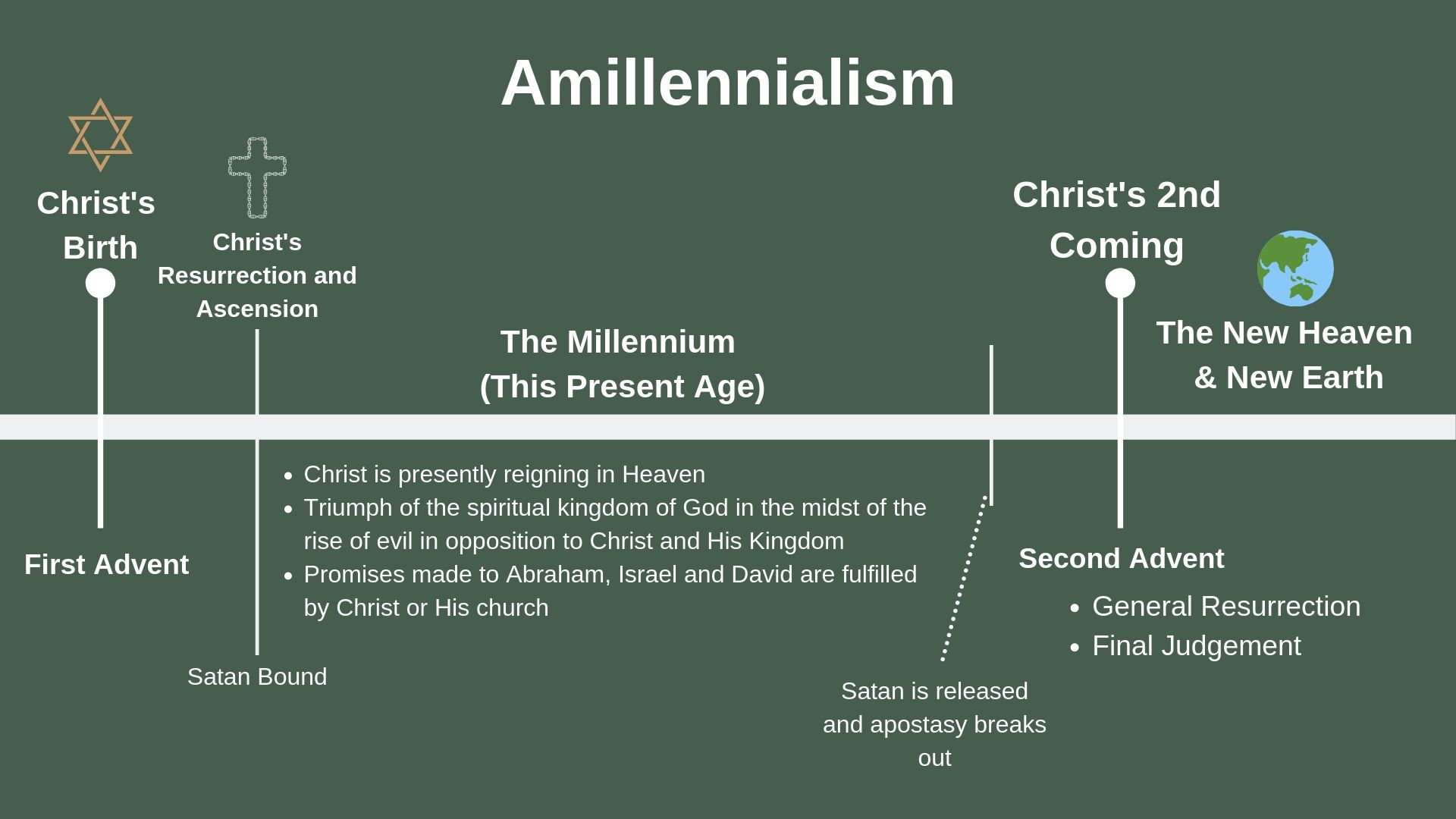
Image from the Church of the Advent




Leave a Reply